By Brian Proffitt, ASF VP Marketing & Publicity
The impact of climate change has made itself felt globally, and the impact is most keenly felt by those who live and work in the developing nations. But while many analysts and policy makers think about the economic and infrastructure effects of climate change, the fact is that all parts of society are under strain from rising temperatures, weather shifts, and extreme weather events.
Last week at the United Nations headquarters in New York, the United Nations Office for Digital and Emerging Technologies (UN ODET) aimed to address one specific segment of the global population dramatically affected by climate upheaval: children.
The Ahead of the Storm UN Tech Over Hackathon was a two-day event hosted by the UN ODET which had 21 teams of developers working to build scalable solutions to urgent, United Nations-identified challenges developed by UNICEF. The teams worked on-site in the UN, in the Economic and Social Council room on day one, and in the Trusteeship Council room on day two.
The Apache Software Foundation (ASF) was one of the participating organizers of the Tech Over Hackathon, with ASF president Ruth Suehle working as a co-organizer, and delivering a keynote for the event on Tuesday. Paulo Motta from the Cassandra PMC and myself served as round one judges on Tuesday.
Judging focused around the teams trying to solve one of three challenges posed by UNICEF.
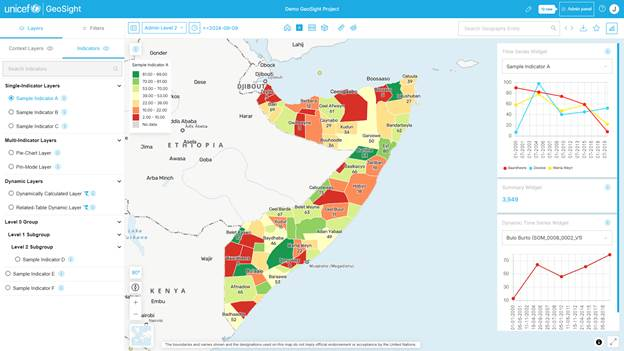
The first challenge, “Unlocking Child-Centric Extreme Weather Intelligence,” required teams to develop methodologies for child-focused impact to enable proactive disaster responses ahead of extreme weather events, such as cyclones. Figuring out the exact nature of the impact on children in affected areas was the goal to solve the second challenge, “Solving the ‘Geo-Puzzle’.” The final challenge, “Make the Risk Data Visible & Actionable,” was to integrate risk data into UNICEF’s open source geospatial web-based data visualization and analysis platform, known as GeoSight.
All of the teams worked nonstop Monday and Tuesday to pull their projects together, with many of them not relying on prior work. The fact that they were building from scratch was very impressive.
As one of the judges for challenge one, I saw a lot of varying approaches on solving early-warning impact predictions. Teams were able to pull from school, hospital, population, and infrastructure data to create robust and interactive maps that would tie into weather model forecasts and then display immediate potential impacts directly in the path of a given storm. As an amateur meteorologist, this work was very impressive, as some teams were able to tie in wind, rain, and flooding impacts to their dashboards. One team was also working on a way to contact local authorities in the path of a storm to alert them of immediate dangers and risks in real time.
The winning teams, the Bytans, SEESALT, and T4SG, made fantastic strides in their work in a very short amount of time. The UN ODET organization will certainly follow up on these projects (and the rest of the teams’ projects), but this also offers an opportunity for those of us in the open source community to also step up and help nurture these projects into more mature and functional tools.
We, collectively, have an incredible amount of knowledge that can be imparted to those new to development and software engineering. To see the work produced in just two days makes it easy to see the potential good such work can do if given more time and energy to foster such projects. I invite my fellow ASF contributors and, indeed, anyone in the open source community, to seek out such opportunities to mentor and nurture some of the amazing talent like I saw at this hackathon.